Imported Bitumen
At GULF INTERNATIONAL, we understand the pivotal role that imported bitumen plays in driving the success of construction endeavors. Our meticulously curated selection of imported bitumen encompasses a spectrum of grades and specifications, tailored to elevate the standards of your projects.Experience the difference that imported bitumen can make in your construction projects with GULF INTERNATIONAL. From concept to completion, trust us to fuel your success with premium-quality bitumen solutions that elevate standards, inspire confidence, and drive lasting impact.
Composition and Properties
- Chemical Make-up: Bitumen is composed of a complex array of hydrocarbons, including alkanes, aromatics, resins, and asphaltenes. It often contains small amounts of inorganic materials as well.
- Physical Characteristics: It is known for being adhesive, waterproof, and extremely viscous. It softens when heated and solidifies upon cooling.
We provide the below-mentioned types of BITUMEN –
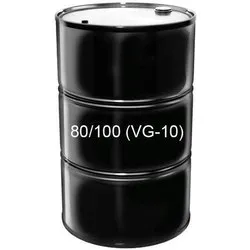
Bitumen VG 10
VG 10 bitumen is a specific grade of viscosity grade (VG) bitumen used primarily in road construction and paving applications. The “VG” stands for viscosity grade, which is a classification system based on the bitumen’s viscosity at specific temperatures. Here’s a detailed overview of VG 10 bitumen:
Characteristics of VG 10 Bitumen
- Viscosity: VG 10 bitumen has a viscosity range of 800 to 1,200 poise at 60°C and 75 to 125 centistokes at 135°C.
- Softening Point: Typically around 40-50°C, indicating the temperature at which the bitumen softens enough to flow.
- Penetration: It has a lower penetration value, indicating that it is harder compared to other grades like VG 20 or VG 30.
VG 10 bitumen is a versatile and essential material in the road construction industry, particularly in regions with cooler climates. Its specific viscosity characteristics make it ideal for certain applications like spray sealing and cold mixes, providing good workability, adhesion, and flexibility. Understanding the properties and applications of VG 10 bitumen helps in selecting the appropriate material for specific paving and construction needs.
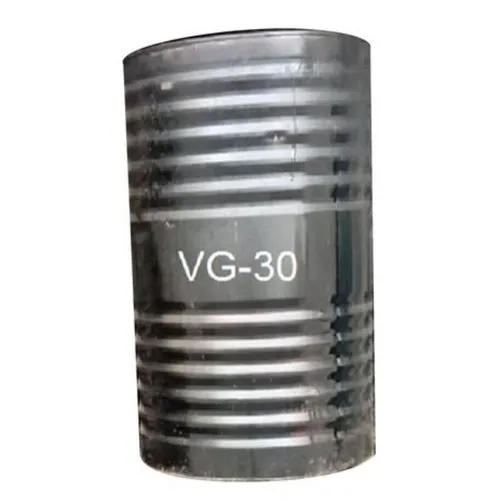
Bitumen VG 30
VG 30 bitumen is a specific grade of viscosity grade (VG) bitumen, which is commonly used in road construction and paving. The “VG” stands for viscosity grade, and VG 30 indicates a particular viscosity range suitable for various applications. Here’s a detailed overview of VG 30 bitumen:
Characteristics of VG 30 Bitumen
- Viscosity: VG 30 bitumen has a viscosity range of 2400 to 3600 poise at 60°C and 200 to 300 centistokes at 135°C. These values indicate its flow resistance at specific temperatures.
- Softening Point: Typically around 47-55°C, which is the temperature at which the bitumen softens enough to flow.
- Penetration: VG 30 bitumen has a moderate penetration value, indicating a balance between hardness and flexibility.
VG 30 bitumen is a versatile and widely used material in the construction of durable and high-performance pavements. Its specific viscosity and balance of hardness and flexibility make it suitable for various applications, particularly in areas with heavy traffic and varying weather conditions. Understanding the properties and applications of VG 30 bitumen helps in selecting the appropriate material for specific road construction and paving projects.
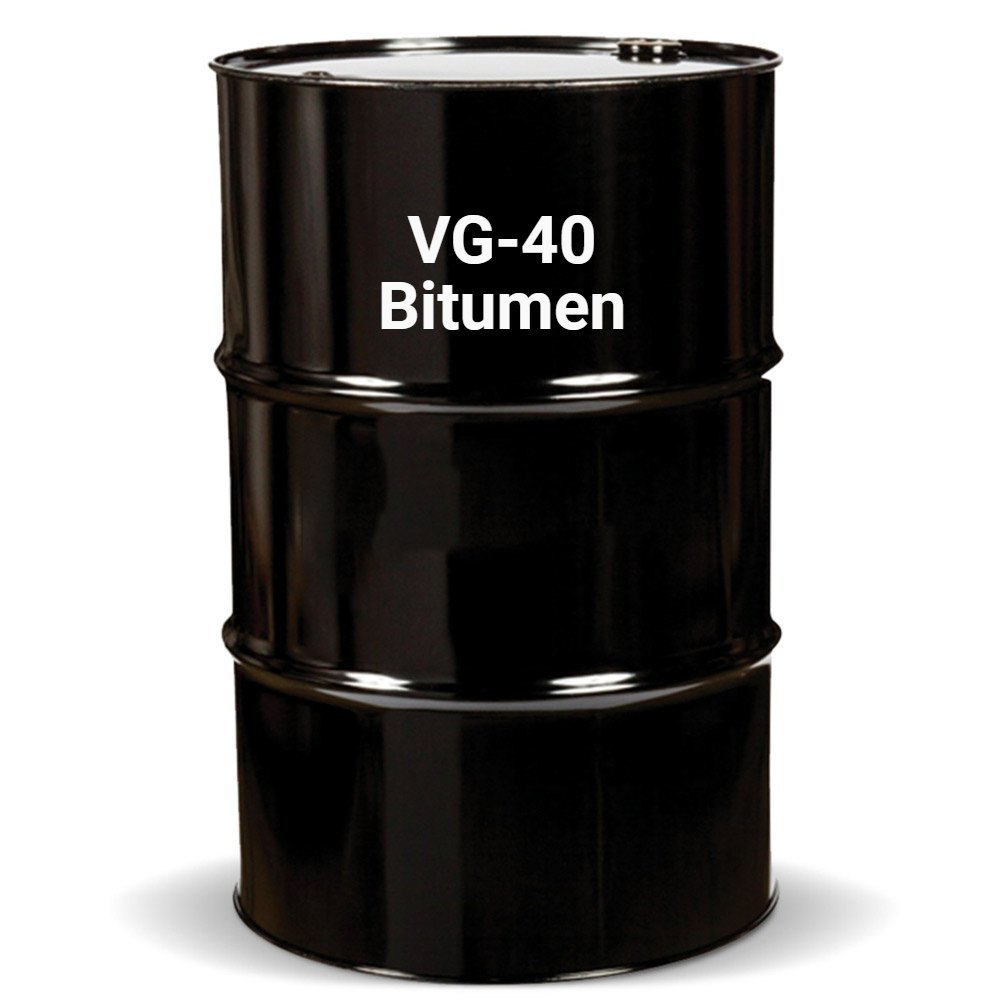
Bitumen VG 40
VG 40 bitumen is a high viscosity grade bitumen used primarily in road construction and other applications requiring enhanced durability and performance. The “VG” stands for viscosity grade, and VG 40 denotes a particular range of viscosity suitable for specific conditions and heavy-duty applications. Here’s a detailed overview of VG 40 bitumen:
Characteristics of VG 40 Bitumen
- Viscosity: VG 40 bitumen has a viscosity range of 3200 to 4000 poise at 60°C and 250 to 350 centistokes at 135°C. This high viscosity makes it more resistant to deformation under load.
- Softening Point: Typically around 50-60°C, indicating the temperature at which the bitumen becomes sufficiently soft.
- Penetration: VG 40 bitumen has a low penetration value, indicating that it is harder and less prone to deformation compared to lower viscosity grades.
VG 40 bitumen is a highly durable and resilient material, specifically designed for use in heavy-duty road construction and high-stress applications. Its high viscosity and low penetration values make it ideal for environments that experience heavy traffic loads and extreme weather conditions. Understanding the characteristics and applications of VG 40 bitumen is essential for selecting the appropriate material for robust and long-lasting pavement structures.
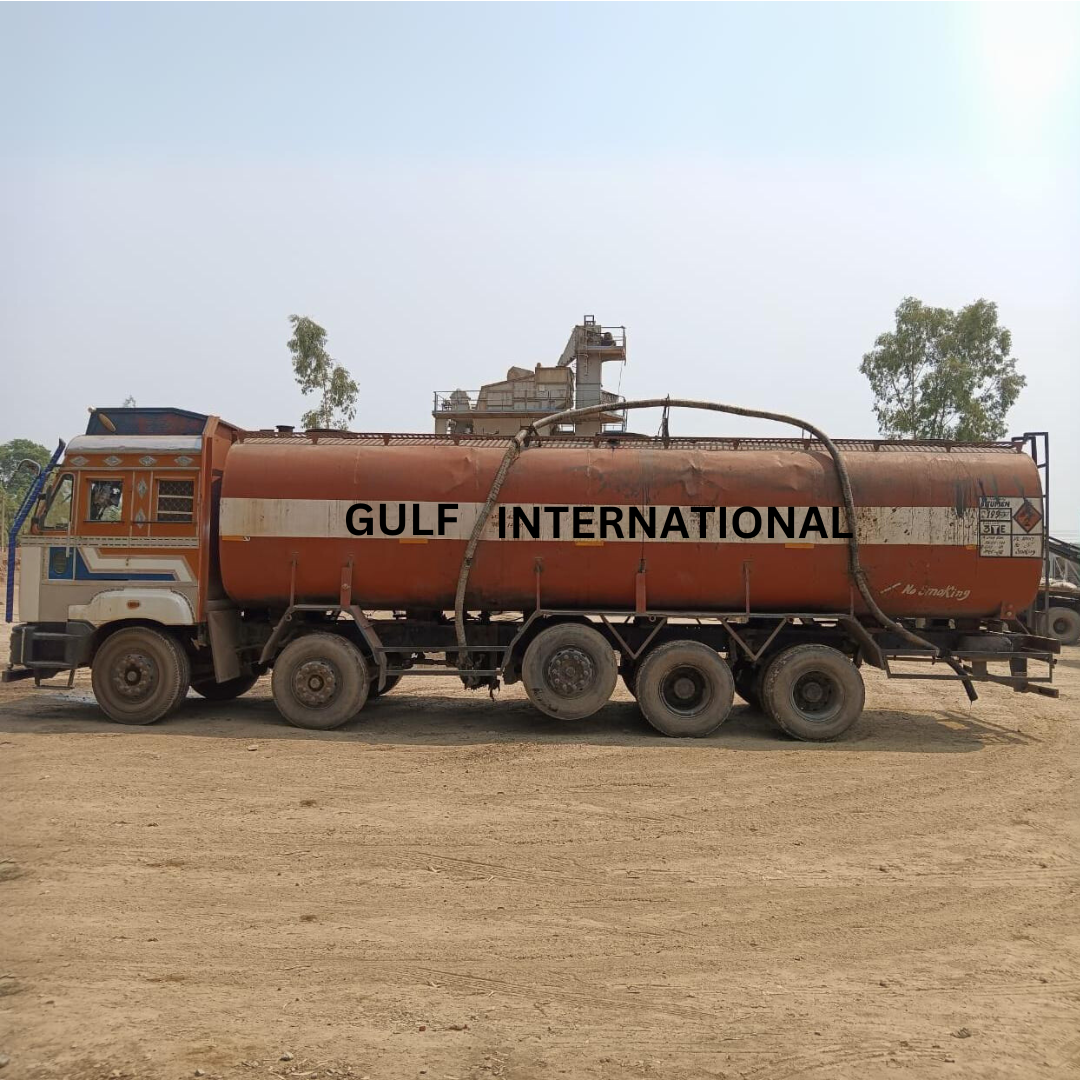
Bulk Bitumen
Bulk bitumen refers to bitumen that is transported and stored in large quantities, usually in tanks or containers, as opposed to being packaged in drums or bags. This method is often used for large-scale industrial and construction projects where significant amounts of bitumen are required. Here’s a detailed overview of bulk bitumen:
Characteristics of Bulk Bitumen
- Volume: Typically handled in large quantities, often ranging from several tons to hundreds of tons.
- Storage: Stored in insulated tanks or silos to maintain the required temperature and prevent solidification.
- Transportation: Transported in bulk carriers, tanker trucks, rail cars, or ships designed to handle high temperatures.
Bulk bitumen is an efficient and cost-effective way to transport and store large quantities of bitumen for industrial and construction applications. Its use is particularly advantageous in large-scale projects where significant volumes of bitumen are needed. Proper handling, storage, and transportation practices are essential to maintain the quality and usability of bulk bitumen.
Modified Bitumen
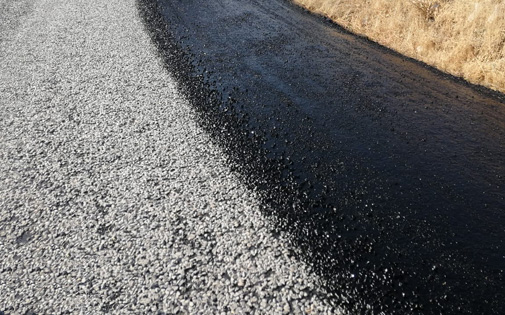
Modified bitumen is a type of bitumen that has been enhanced with polymers or other additives to improve its performance characteristics. These modifications result in bitumen with improved properties such as elasticity, flexibility, durability, and resistance to temperature extremes, making it suitable for a wide range of demanding applications. Here’s a detailed overview of modified bitumen:
Characteristics of Modified Bitumen
- Enhanced Properties: Modified bitumen exhibits improved mechanical properties, including greater elasticity, higher tensile strength, and better resistance to deformation and cracking.
- Temperature Resistance: It performs well over a wider temperature range, resisting softening at high temperatures and becoming brittle at low temperatures.
- Adhesion and Cohesion: Provides superior adhesion to aggregates and enhanced cohesion, which improves the durability of pavements and roofing materials.
Modified bitumen is an advanced material widely used in construction and industrial applications due to its enhanced performance characteristics. By incorporating various polymers and additives, it offers improved durability, flexibility, and resistance to temperature extremes, making it ideal for high-performance roads, roofing systems, and waterproofing applications. Understanding the specific properties and benefits of modified bitumen helps in selecting the right type for various demanding environments.
Bitumen Emulsions (CRMB)
Bitumen emulsions CRMB (Crumb Rubber Modified Bitumen) is a specialized type of bitumen emulsion that incorporates recycled crumb rubber from old tires as a modifier. This modification enhances the properties of bitumen, making it more durable, flexible, and resistant to aging and fatigue. Here’s a detailed explanation of bitumen emulsions CRMB:
Characteristics of Bitumen Emulsions CRMB
- Modified Properties: Incorporating crumb rubber modifies the bitumen’s properties, enhancing its elasticity, flexibility, and resistance to cracking and deformation.
- Recycled Material: CRMB utilizes recycled rubber from old tires, contributing to environmental sustainability by reducing waste and promoting recycling.
- Improved Performance: Offers superior performance compared to conventional bitumen emulsions, particularly in areas with heavy traffic loads and extreme weather conditions.
Bitumen emulsions are a versatile and efficient solution for various road construction and maintenance tasks. Their ability to be applied at lower temperatures, combined with improved safety and environmental benefits, makes them an attractive option for many applications. Understanding the types and uses of bitumen emulsions can help in selecting the appropriate product for specific construction needs.

Ready to Grow Your Business?
Fill in the undermentioned Form